


JPMorgan's core problems
 Pedestrians walk past the JP Morgan Chase headquarters in New York.
Jpmorgan Chase & Co lost at least $2 billion in its failed hedging strategy not only because it was sloppy, but because it grew too big in a rarified market of complex financial instruments that it had created.
The strategy involved credit default swaps, a kind of derivative that was at the centre of the 2008 financial crisis. The swaps were originally used to hedge the bank's exposure to other investments it owns and included contracts tied to North American investment grade and junk corporate bonds, as well as bonds in Europe and Asia.
JPMorgan helped invent the market for such swaps, known as "synthetic" positions because they trade risk without trading the actual bonds. But two things made these particular positions untenable and costly for JPMorgan, according to traders in the market and derivatives experts.
First, as bond markets shifted and forced JPMorgan to realign its hedges, the bank layered swap on top of swap, complicating the structure and increasing the risk that its hedges would fail to offset losses from one swap with gains from another.
Second, the sheer size of JPMorgan's swap position became more than the thinly traded market could easily manage. The lack of liquidity meant the exit door was too small for JPMorgan to fit through quickly once the trades started to deteriorate.
Making matters worse, because JPMorgan was so dominant in this market it became clear to hedge funds and other trading entities that it was isolated and at risk -- providing opportunities for those who could successfully trade against the bank's position. The complexity of the trades made it difficult for the bank to stay on top of the risks as its position worsened.
Jamie Dimon, JPMorgan's CEO, has acknowledged sloppy execution and oversight of the trades. And he said it could take the rest of this year or longer to unwind the positions. He has declined to give details about how illiquid the positions are, but has said the bank could lose another $1 billion or more before the company can trade them away. Competing traders could force JPMorgan to pay even more to exit the trades, now that many have figured out details of the bank's position.
The effects of JPMorgan's stumble are still being tallied.
Though the bank can easily absorb a loss of $2 billion or more, its credit rating was cut on Friday by Fitch Ratings and its reputation for avoiding problems was dented. Dimon's calls to ease pending regulations have lost credibility. After all, the regulations are supposed to prevent banks from taking big risks of this kind with their balance sheets. On Friday, the bank's shares plunged more than 9 percent, wiping about $15 billion off its market value.
The bank is investigating how it got into the mess, and it is expected this week to accept the resignation of Ina Drew, the New York-based head of the Chief Investment Office where the trades were made, and ask for the resignations of two of her subordinates, London-based Achilles Macris and Javier Martin-Artajo, according to sources familiar with the matter.
A JPMorgan spokesman declined to comment for this story.
JPMorgan created the credit default swap market in the 1990s, when a team of its financial engineers designed the instruments so institutions could hedge, or speculate on, changes in the creditworthiness of bonds. In 2001, the bank launched an index of swaps that helped pave the way for the instruments to be actively traded.
At the root of the losses, traders at other firms say, were bets tied to debt through an index known as CDX.NA.IG.9, which tracks credit default swaps on about 127 investment grade companies in North America, including Target, Home Depot, Kraft Foods, Wal-Mart and Verizon Communications.
The position came to consist of layers of index positions that were both for and against corporate creditworthiness getting worse. Some of the positions were supposed to offset, or neutralise, one another. But traders say the risk that the layers would not work together as intended increased as more were added.
For two decades, "financial institutions have been gambling, and often losing, based on assumptions that historical correlations will remain constant or converge," said Frank Partnoy, a former derivatives trader who writes books on the instruments and teaches law at the University of San Diego.
Some traders believe JPMorgan's assumptions began to go awry early this year. One position in favour of a broad improvement in corporate creditworthiness lost money when credit weakened. Worse, a hedge on that position lost money, too, when credit ratings fell for fewer companies than the bank expected in that situation.
The growing problem in the layers of positions probably stayed below the surface because of the way the portfolio was constructed, said Janet Tavakoli, an expert in derivatives and structured financial instruments.
"The nature of JPMorgan's large CDS book is that even a fool will appear to be making money as revenues pour in" from selling protection against default, said Tavakoli, adding that in her view the kind of valuation models JPMorgan uses "cannot distinguish between dumb trades and smart trades." The overwhelming flaw is that assumptions can be manipulated - whether intentionally or otherwise - so that an income stream that isn't hedged appears to be hedged, she said.
But hedge funds and other institutions in the market smelled weakness and dozens took advantage of the bank, according to traders. Reports by the Wall Street Journal and Bloomberg in early April about the bank's giant positions only made awareness of JPMorgan's problem and its isolation greater.
While Dimon has declined to describe the specific positions, he said the bank made the portfolio "more complex" as it tried to "rehedge" its positions over time.
The losses from these trades are embarrassing for JPMorgan not only because the bank helped invent the market, but because the trades themselves are designed to protect the bank from losses. Like insurance policies, the contracts give a buyer the right to collect a payment from a seller if a bond goes into default. As market demand for these insurance instruments increased, banks created ways to trade cross-sections, or tranches, of the synthetic indices.
Now JPMorgan, which emerged from the financial crisis with relatively few wounds and enormous new power and influence, has, by Dimon's own admission, lost credibility because of its mishandling of derivatives.
The Daily Star/ Bangladesh/ 15th May 2012
More financial inclusion is needed The leader of the Association of Bankers Bangladesh talks about how to save people from fraudulent multilevel marketing
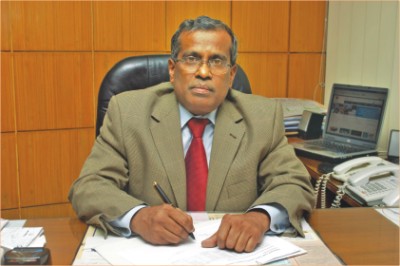 Nurul Amin
It is difficult to stop the so-called multilevel marketing companies from cheating people without further financial inclusion, said the chairman of the Association of Bankers Bangladesh.
In an interview with The Daily Star, Nurul Amin said 50 percent of the population does not have access to health and education.
They are easily lured by the attractive advertisements and propaganda of these companies, he said.
“If people cannot be made bank-oriented, these MLM companies will continue to cheat people,” Amin said.
In India, more than 60 percent of the population has bank accounts. It is only 30 percent in Bangladesh. The number of bank account holders may have increased after the central bank allowed people to open accounts with only Tk 10.
Private banks now open an equal number of branches in urban and rural areas. “As a result after about five years, more people will have access to banks, which may narrow scope for cheating by MLM companies,” he said.
Amin, also the managing director of National Credit and Commerce Bank Ltd (NCC Bank), talked to The Daily Star on a series of issues and the much-talked-about Destiny Group.
MLM companies try to win people's trust through attractive advertisement, but eventually it becomes clear that their so-called business is not based on any ethical policy, Amin said.
Before the Destiny scandal, many such incidents like Jubok and Unipay2u occurred in Bangladesh.
In case of Destiny, the government and regulatory agencies took cautionary steps in time. “I think the government is in the right direction,” Amin said.
On an allegation that the ABB functions as an agent of the central bank instead of working independently, Amin said: “The ABB is no collective bargaining agent.”
It is a voluntary organisation working for the development of the community and has to work within the boundaries of the law, he said.
“Bangladesh Bank is the regulator and we are operators. We must have some relations. However, we think if the central bank wants to take any policy decision it is better if they take it after consulting with the ABB,” Amin said.
About the new banks recently approved by Bangladesh Bank, he said it would have been better if the banks had been of specialised types -- perhaps for the garment industry or small industries or regional.
Now, a number of banks have already been approved and the finance minister has said the permission was given on political consideration. So there is no scope to comment on it, he said.
“We hope competition and fair play will continue to be there after the new banks emerge.”
Amin also focused on banks' involvement in the stockmarket.
The exposure of banks has now become bearable and within a limit, he said.
However, if the exposure is limited to 25 percent of their capital after an amendment to the banking law, it might be initially difficult for the banks to maintain it.
NCC Bank is going to step into its 20th year. It started its journey with Tk 19 crore in paid-up capital in 1992. Its paid-up capital was Tk 695 crore in 2011.
The bank's assets now stand at about Tk 11,000 crore and the bank has been expanding its client base every day. The bank's deposits have crossed Tk 8,000 crore this year.
NCC Bank's net profit rose 3 percent to Tk 421 crore in 2011, compared to the previous year, according to data from the bank. The bank has 87 branches across the country and will open six more branches this year.
The power crisis is the biggest problem in infrastructure development, Amin said. He said NCC has bankrolled three power projects.
About the overall situation in the banking sector, Amin said there seems no big crisis in the sector now due to monitoring by the central bank and the banks' self-regulation.
He, however, said 12 primary dealer banks face some problems in maintaining the credit-deposit ratio.
He said the central bank's cooperation is required in this case.
The Daily Star/ Bangladesh/ 15th May 2012
State Bank of India to sponsor Indo-Bangla trade fair
State Bank of India has become a sponsor of the forthcoming 3rd Indo-Bangla Trade Fair (IBTF-2012), to be held in Dhaka from May 31at the Pan Pacific Sonargaon Hotel, says a press release.
A memorandum of understanding to this effect was signed this moving at the SBI office in Dhaka between the bank and event management company of IBTF-2012 Triune Exhibition and Event Management Services
Ltd (TEEMS).
Pinak Chakraborty, country head in Bangladesh of State Bank of India, and Kazi Wahidul Alam, chief co-ordinator of IBTF-2012 and managing director and chief executive officer, TEEM signed the MOU.
Dewan Sultan Ahmed, chairman, Fair Sub Committee of IBCCI, Jahangir Bin Alam, secretary, IBCCI, Gian Parkash Khetarpal, chief executive officer, and Pranay Ranjan Dwivedi, head of risk management Unit of State Bank of India, were also present among others.
Organised by the India-Bangladesh Chamber of Commerce and Industry (IBCCI), the 3rd version of the Indo-Bangla trade fair is expected to be participated by a large number of entrepreneurs, service providers, and traders from both India and Bangladesh.
The Independent/ Bangladesh/ 14th May 2012
Credit restriction causes high interest rate, says high MTB official
Additional managing director (AMD) of Mutual Trust Bank (MTB), Ahsan-uz-Zaman, observed that Bank interest rates in Bangladesh is still very high. “I personally think the interest rate is very high, but it is a function of the inflation rate and it is also a function of the cost of deposit in the market which is high.” He said that his Bank would set up agri-branches in rural areas to serve the unbanked people.
“Apart from setting up rural branches, we are also setting up agri-branches as a big plan to serve the under-served and unbanked particularly in rural areas,” Ahsan-uz-Zaman said, in an exclusive interview with The Independent.
Responding to a question about the Bank’s new products and services, Ahsan-uz-Zaman said every bank tries to enhance the quality of its services, and
the Mutual Trust Bank also tries to understand clients so as to make its services more acceptable to them.
“In 2011, we introduced and extended our ATM network. We are among the few banks that have ATM networks across the country. In one year, we’ve set up 93 ATMs across the country, and the number is going to further increase in the coming months,” he added.
Early last year, the Bank also introduced POS (Point of Sales) machines and currently it has about 400 POS machines at various business establishments, he pointed out.
He further said that since a lot of Bangladeshis are living abroad, the Bank has made a constant effort to make it convenient for these non-resident Bangladeshis (NRBs) to send money to the country. “We have various remittance agreements with different exchange houses across the Middle East and some other countries.
We have already signed an agreement with Western Union which has a major money transfer channel in the world,” he added.
The MTB has introduced two savings products—an account called MTB Junior for school-going kids, which can be opened by the parents, and MTB Graduate, which is meant for university-going young adults. “We have also introduced a product for women, which is called Ruby,” he added.
In the medium and small-enterprise areas, the bank had introduced MTB Probaha and MTB Buniad, he said.
“Probaha is a current account which will pay interest and MTB Buniad is a fixed deposit type product for two years or three years for the business community,” he explained.
When asked how he would evaluate the overall performance of his bank, Zaman said it was a difficult environment for the Bank last year. “But we are happy that at least we were able to increase our loan portfolio and we have grown by 18 per cent roughly year by year.
On the deposit side, we have grown by about 31 per cent,” he noted.
Explaining the challenges that the bank had faced, he said the cost of getting deposit was quite high and it was mostly on the fixed deposit side. “So, we did a good job in terms of deposit cost as the cost of deposit increased by 16 per cent,” he added.
“Our net income increased by about 37 per cent, because of the expenses which increased by 62 per cent. The net interest margin fell to about 29 per cent.
Our operating expenses have also gone up to about 38 per cent,” he observed.
This, he said, was a result of the increase in the Bank’s establishment cost and an increase in its fixed assets. “So, our operating profit as a result could actually be in absolute terms about Tk. 120 crore compared to Tk. 200 crore in the previous year,” he said.
The MTB has plans to grow its branch network very aggressively, he said, adding, “Currently, we have about 76 branches.”
Because of this expansion plan and increase in the MTB’s establishment costs, the Bank’s net profit after tax was approximately Tk. 40 crore compared to Tk. 98 crore in the previous year.
Asked about the target of his Bank for current and next years, the AMD said the Bank’s plan was to grow its deposit base by 28 per cent in 2012 and its loan portfolio by 22 per cent.
“It is going to be a challenge because our net profit level in 2012 is pretty aggressive and we want to grow our net profit about 18 per cent over the year,” he added. About reaching out the banking services to the unbanked people, he said, “We do that by our own and we have a significant presence in deprived areas.
Apart from setting up rural branches, we are also setting up agro-branches to serve the under-served and unbanked folks, particularly in rural areas. And we’ll do it through our alternative delivery channel, namely internet, as well.”
“We are also going to enhance the ability of the clients to access banking services through their mobile phones,” he added.
Clients could also get access to their accounts by giving the bank a call, he said, adding, “We are not doing things in the traditional way as we are trying to serve the clients by developing our in-house capabilities.”
Replying to a question about the uniqueness of his bank, Zaman said, “We try to understand the clients’ needs, and provide customised banking solutions for them.
“I think we give a lot of importance to the quality of our services.”
Explaining the CSR activities of MTB, Zaman pointed out that the Bank is well aware of its responsibility to the community and participated in its CSR activities by helping needy children, providing scholarships, financial assistance to the poor and distressed. “And during times of natural calamities, we help the affected,” he added.
The Bank also participated in various projects, which had a beneficial impact on environment and society, he said.
The Bank had provided financial support and training to about 120 handicapped people, donated funds to female Bangladeshi painters and set up a school in a remote char area in Bhola. “We have an MTB Foundation which is headed by our founding chairman.” When asked about the necessity of launching new banks in the country, Zaman responded positively, saying as the country was growing there was a need for increasing banking services.
He further said, “I think about 80 to 90 per cent of the urban people avail banking services. Well, the mandate for the new banks is to serve the areas which were not served before.
So they will be concentrated more in the non-urban areas and this is going to bea challenge for them.”
He claimed thatMTB’s interest rate is low.
With regard to the government’s restricted credit growth policy, Zaman said, “If you restrict the credit growth, the interest rate would be a bit higher.”
“I think it is a function of all this, and the increased browning requirement of the government requires funds in the markets.
This is creating pressure on the market and the cost of funds is growing up,” the AMD added.
“The interest rate is needed to be raised initially to restrict demand for the masses.
The increased subsidy requirement of the government in agriculture, energy, fuel and fertilizer is also very high.
And there are reasons that need to be supported.
The requirement is high and it is going up. So once we are able to control that I think the impact would be visible,” he explained at length.
The Independent/ Bangladesh/ 14th May 2012
DBBL opens branch at Pubail
 Md. Sayedul Hasan, Deputy Managing Director of DBBL inaugurates a new branch at Pubail in Gazipur on Sunday.
Dutch-Bangla Bank has opened its 115th branch at Mirer Bazar, Pubail at Fouzia Sarker Commercial Complex, Kamargaon, Mirer Bazar, Pubail, Gazipur on Sunday.
Like the other DBBL branches, this branch will provide on-line banking facilities to the clients from the opening day of the branch, according to a press release.
Md. Sayedul Hasan, Deputy Managing Director of the Bank formally inaugurated the Mirer Bazar branch.
The opening ceremony started with milad mahfil seeking blessings of the Almighty Allah for successful operation of the branch, prosperity of the business community, depositors and stakeholders of the Bank.
The Daily Sun/ Bangladesh/ 14th May 2012