


Southeast Bank Bangladesh - SEBL holds workshop on implementation of SRP
Southeast Bank Limited (SEBL), Bangladesh organised a workshop on "Implementation of Supervisory Review Process (SRP) under Pillar II of Basel II" in the city recently, said a press release.
The workshop was organised for the team members of SRP to enrich their knowledge base and to discuss the related risk factors towards effective implementation of SRP.
Addressing the inaugural function, Deputy Managing Director (DMD) Syed Imtiaz Hasib said the bank successfully implemented Minimum Capital Requirement (MCR) Pillar I of Basel II through incorporating credit risk, market risk and operational risk and now plans to handle and implement Pillar II through ensuring Adequate Capital commensurate with bank's risk profile which will ultimately safeguard depositors' interest.
General Manager of Bangladesh Bank KM Abdul Wadood delivered his keynote address at the workshop.
Source: Financial Express/Bangladesh/May 26, 2011
New-look Bank Company Act on the cards
The Bangladesh Bank (BB) has almost completed the draft of the proposed amendment to the Bank Company Act in order to reduce numbers of private bank directors, streamline bank's capital market exposure and empower central bank to directly penalise individuals or organizations for breaching the law. The proposed draft law also aims to bring on changes in cash reserve requirements of banks and it would allow more than one person as nominee, the central bank sources said. “We have almost completed the draft amendment of the Bank Company Act. We are hopeful that we would be able to submit it to the finance ministry by next month,” Jahangir Alam, executive director, Bangladesh Bank, said.
Sources said the draft amendment proposes to keep the maximum number of directors at 20. Currently, many banks have 30 to 40 directors, which the central bank committee identified as a barrier to becoming a well governed company.
“We have found that bank boards, endowed with a sizeable number of directors, face various problems especially in providing loans,” an official said preferring anonymity. The committee is also considering barring more than two members of a family from sitting on a bank board at a time.
The draft amendment is likely to propose formation of a central financial regulatory authority, involving in it all the financial regulatory bodies including the central bank, the insurance authority, the micro-credit authority and the Securities and Exchange Commission, so that, in future, the body can monitor banks’ exposures to other areas as well.
The draft law also proposes to amend Section 109 of the Bank Company Act empowering the central bank to penalize individuals and organizations without having to go court, the official said.
Currently, many offenders go to court after conducting grave financial offences including siphoning of money from banks’ vault.
The committee will also introduce changes to Section-35 of the Act to accommodate more than one person as nominee of an account holder. Currently, a depositor can keep only one person as his nominee. The committee is also mulling setting up a central corporate memory to keep track record of any individual who committees offence in his professional carrier.
“If the criminal record could be preserved and managed centrally, it would benefit all the commercial banks in terms of checking background of people seeking loans. It would help reduce corporate crime significantly,” the official explained.
The Bank Company Act is being modified to meet global standards, by accommodating suggestions of donor groups, as it is one of the major priorities of the government.
Sources said the central bank is working on updating all laws related to the banking sector, particularly Bank Company Act, 1991, BB Order, 1972 and the Bankers' Book Evidence Act, 1891.
Clause 7A (a) of the Bangladesh Bank Order, 1972, clearly says that one of the major functions of the central bank is formulation and implementation of monetary policy from time to time.
The BB initiated the move about one year back as per an ordinance promulgated by the immediate past caretaker government (CG). The CG could not implement the ordinance owing to stiff opposition from the parliamentary standing committee and influential quarters of the government itself, sources alleged.
The ordinance, promulgated by the caretaker government, limits the number of directors on a bank board to a maximum of 13. But, the Bank Company Act, 1991 (Amended) does not limit the number of bank directors. The commercial banks appoint directors as per their respective Articles of Association, banking sources said.
The new draft of the Bank Company Act seeks to change the definition of defaulted loan and double the existing amount of capital for commercial banks.
Source: The Independence/Bangladesh/May 26, 2011
Islamic banking on a roll - IDB chief shares his views on Islamic finance with The Daily Star
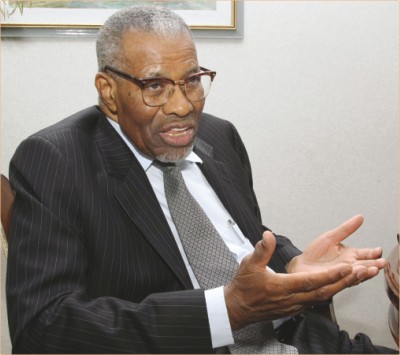
Ahmad Mohamed Ali - IDB Chief
Bangladesh's commercial banks following Shariah-based principles will continue their phenomenal growth as elsewhere in the world as the system deals with 'real economy and real commodity', the head of Islamic Development Bank (IDB) Group said.
In Bangladesh, there are now seven Islamic banks that provide full-fledged Shariah-based financial services through 622 branches. Besides, a number of conventional banks have set up branches to grab a pie of the market.
“The IDB is a shareholder of Islami Bank Bangladesh, the largest Islamic bank in the country. It is doing very well. Buoyed by its success, Bangladesh has now a number of Islamic banks,” said Ahmad Mohamed Ali, president of Jeddah-based IDB.
“A number of commercial banks have also opened wings for Islamic banking. It is growing and we expect the growth will continue in future,” he told The Daily Star on Monday in an interview.
He said the Islamic banks in Bangladesh are growing faster with high profit margin, due to the preference of people. “This is the choice of the people.”
“There is an indication that they expect to earn more,” he said, when asked about the reason why many commercial banks are opening Islamic banking wings or totally converting to Shariah-based banking.
Ali said the growth of Islamic banking in Bangladesh is part of the phenomenal growth of Shariah-based financial system across the world, particularly after the global financial crisis.
He said Islamic banking is spreading across the world, not only in the Muslim countries, but also in the non-Muslim countries.
“Islamic banks have proved more resilient to the crisis. There is a demand for it, especially after the financial crisis in countries such as England, France and Italy,” he said.
Although the head of the development bank could not give an exact estimation of the growth of Islamic banking, he said: “Many experts and observers say Islamic banking is a fast-growing industry. Some of them put the annual growth at 15 percent and higher.”
“The industry will definitely grow more and more in the future.”
He said, when the IDB was established in 1975, there was only one Islamic bank in the world. “Now, there are hundreds of such banks managing billions of dollars.”
There are Islamic banks in 40 countries, and those are handling business worth $22 trillion, according to analysts. In Bangladesh, private banks control about 62 percent of the economy, and Islamic banks account for a significant part of that.
During the global financial crisis, a number of big banks in the developed world collapsed and had to be bailed out by taxpayers' money, while banks complying with Shariah principles continued outstanding growth.
“The reason is very simple: Islamic banking deals with real economy. There is no speculation,” he said.
In Bangladesh, critics have serious misperception and doubt about the religion-based banking system, but Ali defended, saying: “There are Shariah committees; the central bank audits them regularly and they publish their accounts. So I don't understand why there should be any misperception.”
Ali said he does not think there is any need for a separate regulatory system to police Islamic banking. “In my opinion, Islamic banks should be regulated by the normal authorities. But there are some necessities of the Islamic banking that should be taken into consideration by the central bank.”
He said, for every Islamic financial institution there is a Shariah board to ensure that the operations of that institution are in accordance with Islamic principles.
Critics say Islamic banks cash in on people's sentiment -- a thing Ali has not denied completely. “In any business, you have to market it and cash in on the sentiment or the feelings of the customers.”
“You need to use all ways and means to convince the potential customers to come and buy your products.”
He said Islamic banks respond to the demand from individuals either because of their belief or nature of the business. There are some businesses that are appropriate for the market.
“In Malaysia, for example, there are Chinese businessmen who are dealing with Islamic banks although they are not Muslims. They found Islamic banking as more appropriate for their business.”
This week Ali was in Dhaka to facilitate signing of an agreement to finance shelter, water supply and sanitation projects in the cyclone Sidr-affected areas under IDB's $130 million philanthropic “Fael Khair” programme.
The donation was made to the bank by an anonymous philanthropist to support the victims of cyclone Sidr, which hit the coastal areas of Bangladesh in 2007, killing thousands and rendering millions homeless.
On Monday, Ali, the former deputy education minister of Saudi Arabia, visited Sidr-affected Sharankhola upazila in Bagerhat to lay the foundation stone of a school-cum cyclone shelter.
Of the total grant, $110 million will be spent for constructing about 440 cyclone shelters-cum-primary schools. Each building, equipped with solar energy, will be used as schools in the normal time and as shelters during any natural disaster.
The IDB is providing $140 million to the government to help construct the much-talked Padma Multipurpose Bridge.
“This is the largest participation of the development bank in any single project in Bangladesh,” he said.
- By
Source: The Daily Star/Bangladesh/May-25-2011
IDB selects four NGOs for philanthropic programme
Islamic Development Bank has selected four nongovernmental organisations to implement the $130 million (more than Tk 900 crore) Fael Khair programme for victims of Cyclone Sidr, IDB President Ahmad Mohamed Ali said yesterday.
The NGOs are: Islami Bank Foundation, Muslim Aid, Voluntary Organisation for Social Development (VOSD) and BRAC.
“The fund is being utilised for the construction of several hundred school-cum-cyclone shelters in the coastal belt and provision of urgent relief in the form of agro inputs to the victims,” said Ali while speaking on the global financial crisis and Islamic banking at an international seminar at Sonargaon Hotel in Dhaka.
Islamic Banks Consultative Forum organised the seminar with its chairman Abu Nasser Muhammad Abduz Zaher in the chair.
Ali, the former deputy education minister of Saudi Arabia, yesterday visited the cyclone Sidr affected Sharankhola upazila in Bagerhat to lay the foundation stone of the first such school-cum-cyclone shelter.
Under the Fael Khair project, Abdul Monem Ltd and DCL-PCCL will build shelter buildings in Khulna, Satkhira, Bagerhat, Barisal and Patuakhali districts.
The IDB chief, however, has refused to name the philanthropist who donated $130 million for the welfare of Sidr victims.
On the global financial crisis and Islamic banking, Ali said Islamic banks remained resilient through the first wave of crisis during 2008-09, but they were partly affected by the second wave in 2009.
He said the increased severity of the crisis also led to an increase in customer defaults and rescheduling of dues.
“Islamic banks suffered because of severe price devaluations in some other asset classes like equities and Sukuk and managed funds, which were adversely affected by the crisis,” said Ali.
He also said though the Islamic financial sector now appears to be recovering, the growth rates are expected to be less aggressive compared to the recent past.
He said the IDB has formed a financial services board and a research and training centre recently.
Ali said the IDB has raised $750 million recently from the market, which will be spent in the member countries.
Some 275 officials from Islamic banks and conventional banks that run Islamic banking will attend the seminar to be addressed by renowned national and international speakers.
Source: The Daily Star/Bangladesh/May-25-2011
Intraco Group New Partner For SCB Credit Card’s InstaBuys At 0pc
Standard Chartered Bank and Intraco Group have signed an agreement through which the Credit Cardholders of the Bank will enjoy special InstaBuys at 0 per cent Interest offers at Intraco CNG Ltd and Intraco Renewable Energy Ltd says a press release. Under this agreement, Standard Chartered Credit Cardholders will enjoy the benefit of paying the bills in up to 12 months installment absolutely at zero per cent Interest to the bank if the customers settle the bills using Standard Chartered Credit Card (except Saadiq Card) for CNG Conversion or purchasing Motor Bike, Solar Panel and Generator.
Md Irad Ali, deputy managing director, Intraco Group and Gitanka D Datta, head of cards of Standard Chartered Bank has signed the agreement for the respective organisations.
Quazi N Shahriar, general manager, sales and marketing, Intraco Group, Md Mahfuzur Rahman, Sr manager, product and channel support, Cards and Aftab Mahmud Khurshid, head of marketing, consumer banking of Standard Chartered Bank and other senior officials of both the companies were also present at this agreement signing ceremony.
Source: The Independent/Bangladesh/May-25-2011